
Free Muslim Biodata
for Marriage
Create a Muslim marriage biodata with all the right sections - maslak, caste, family background, and partner expectations. Download free as PDF or Word in minutes.
At a Glance
What Is a Muslim Marriage Biodata?
A Muslim marriage biodata is a one-page document used during the rishta process - the arranged marriage search in Muslim families. It introduces a prospective bride or groom to the other family, covering personal details, family background, education, profession, religious practice, and partner expectations.
The Muslim marriage biodata format differs from Hindu or general biodatas in a few key ways. Instead of gotra, nakshatra, and rashi, it includes maslak (school of Islamic thought), sect (Sunni or Shia), and caste or community within the Muslim community - such as Sheikh, Syed, Pathan, Ansari, or Qureshi. Some families also include whether the household is practising, whether the bride observes hijab, and whether the family has performed Hajj - though these are optional.
The overall tone is direct and formal. Most Muslim families prefer a clean, uncluttered format rather than decorative designs, though this varies across regions and communities.
A note on language: Muslim biodatas are created in English, Urdu, or a mix of both. Our maker supports both. If you are creating a rishta biodata for a family in India, English with Urdu terms for maslak and caste is the most widely understood combination.
Free Muslim Marriage Biodata Templates
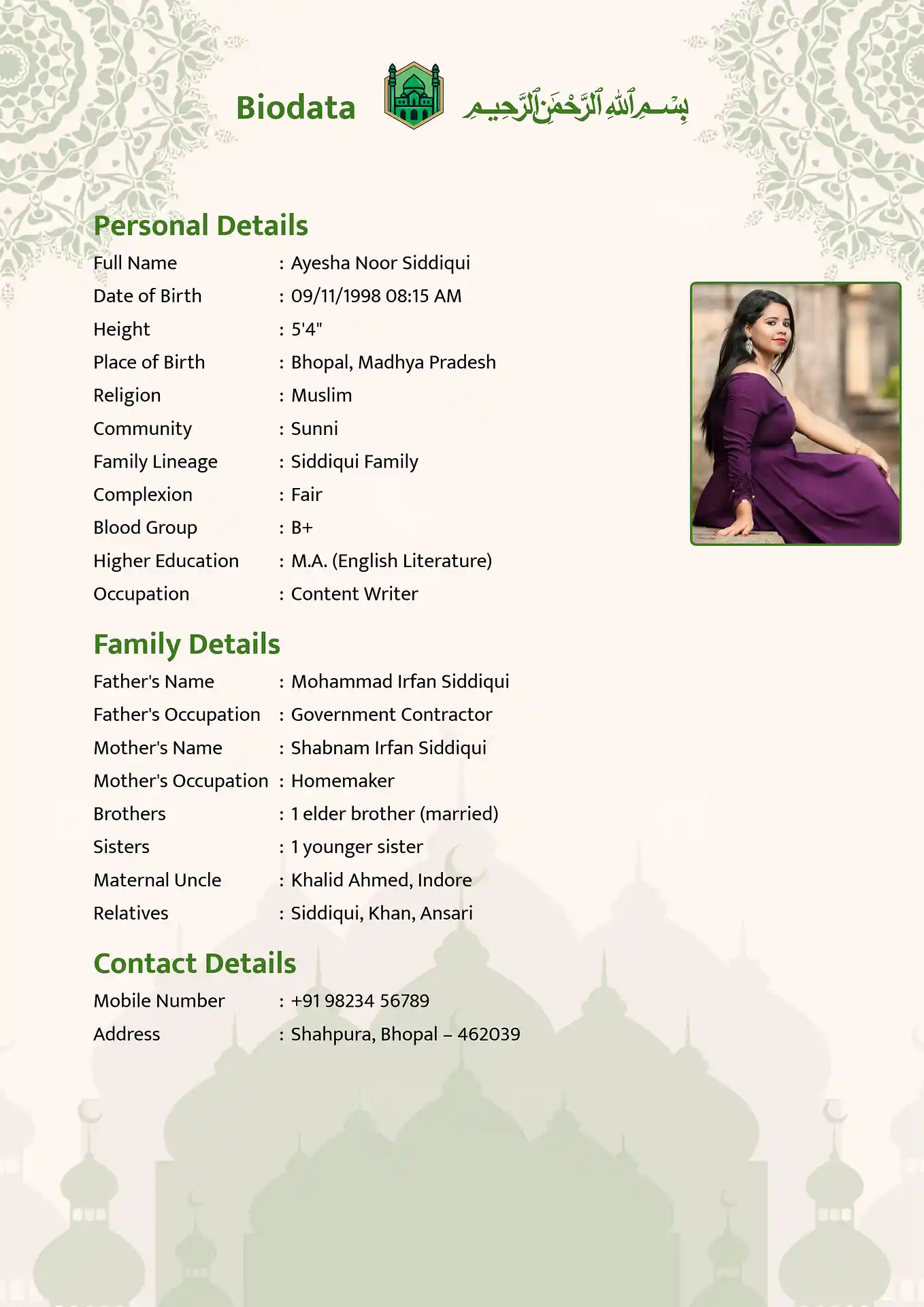
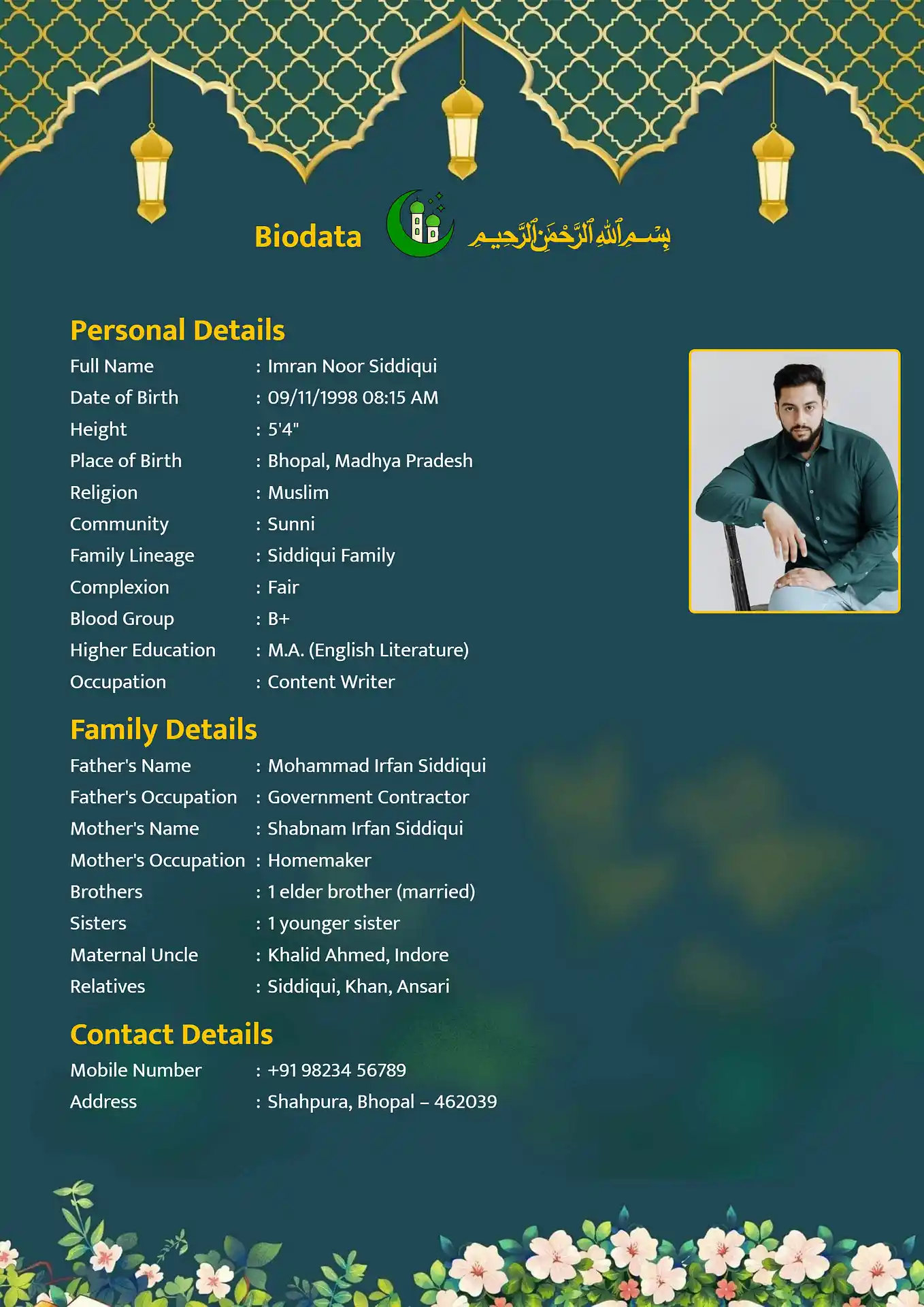
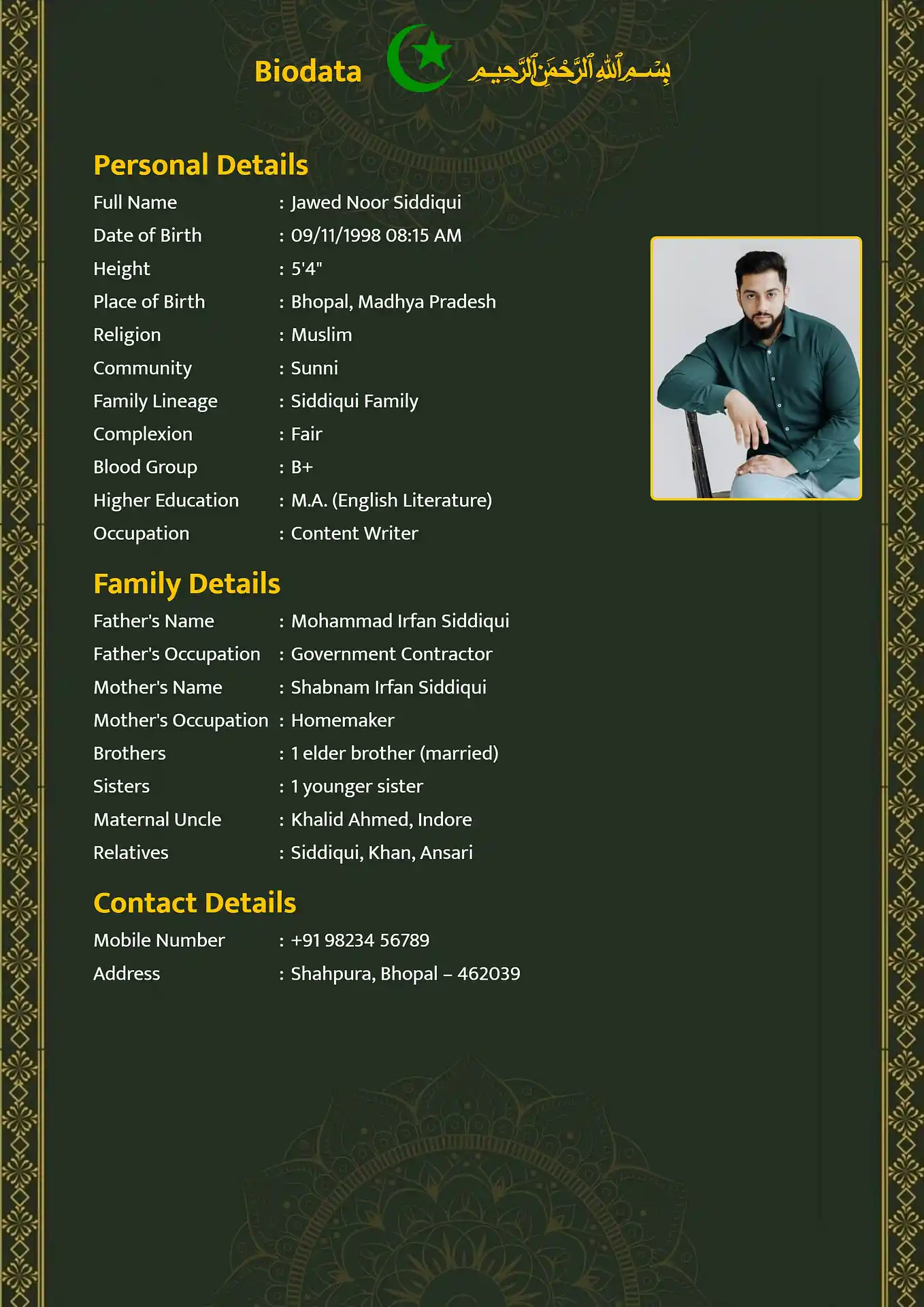
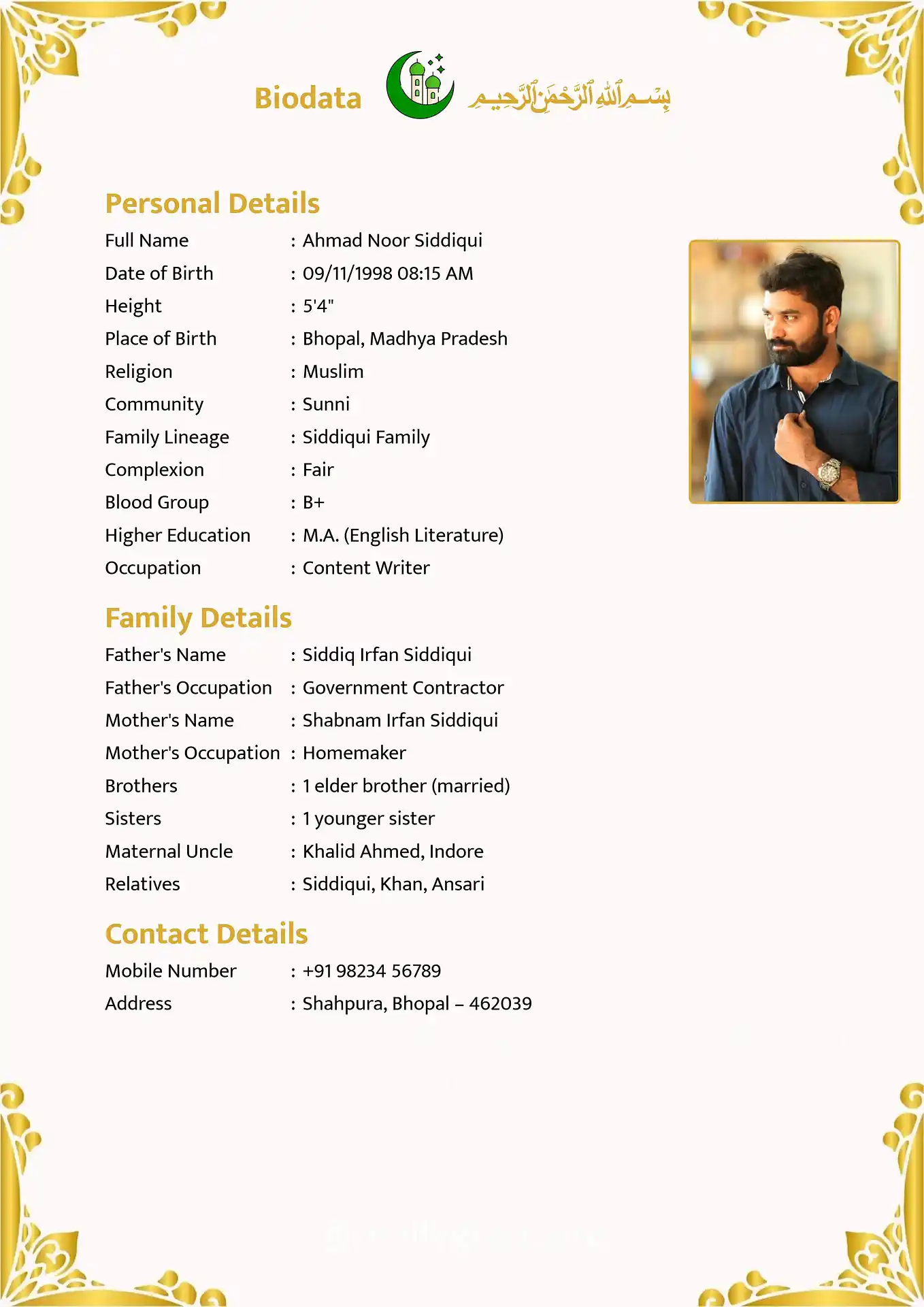
Clean, formal designs suited to Muslim families. Every template is free - click any design to open the Muslim biodata maker, fill in your details, and download as PDF or Word. No account needed.
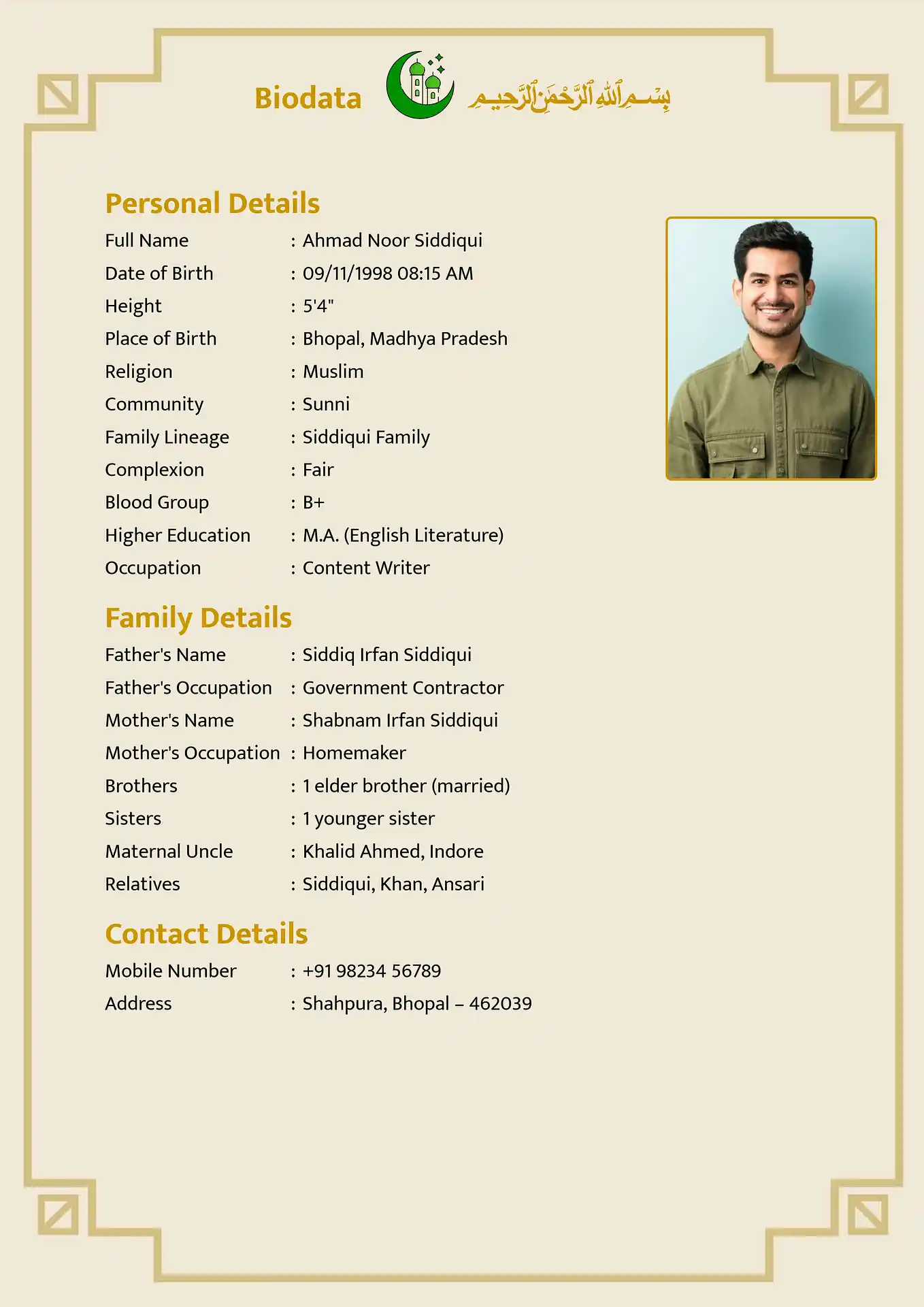
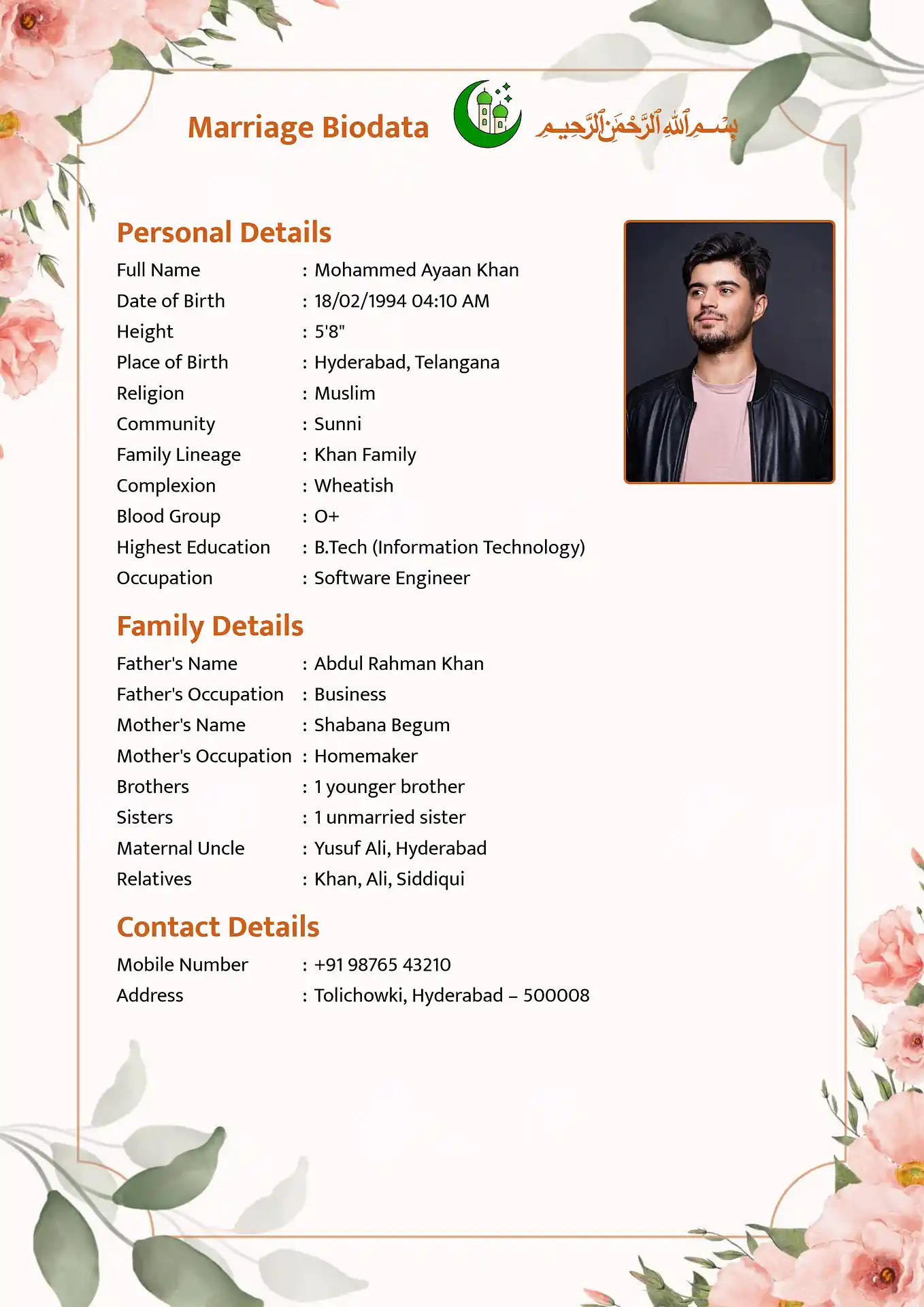
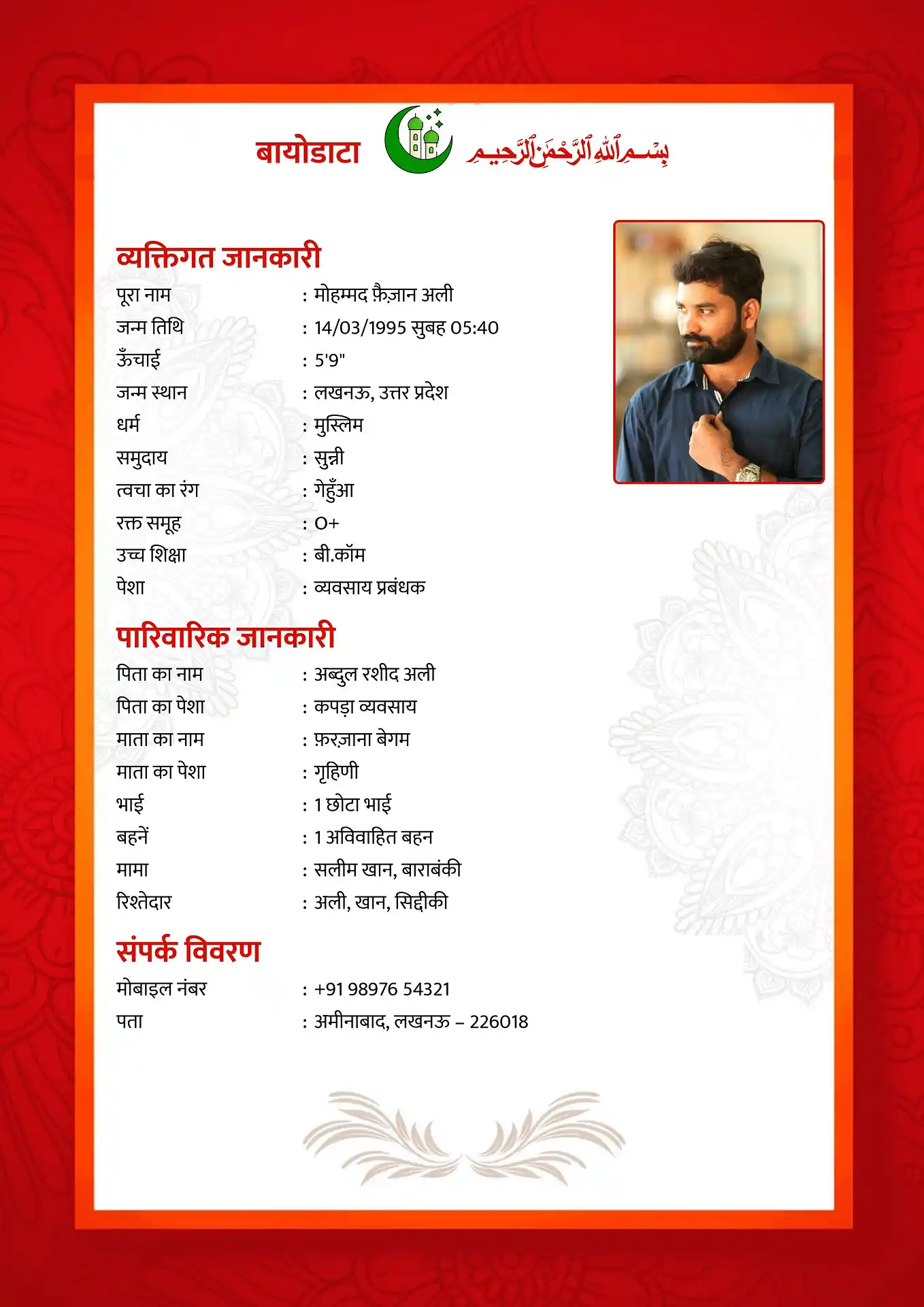
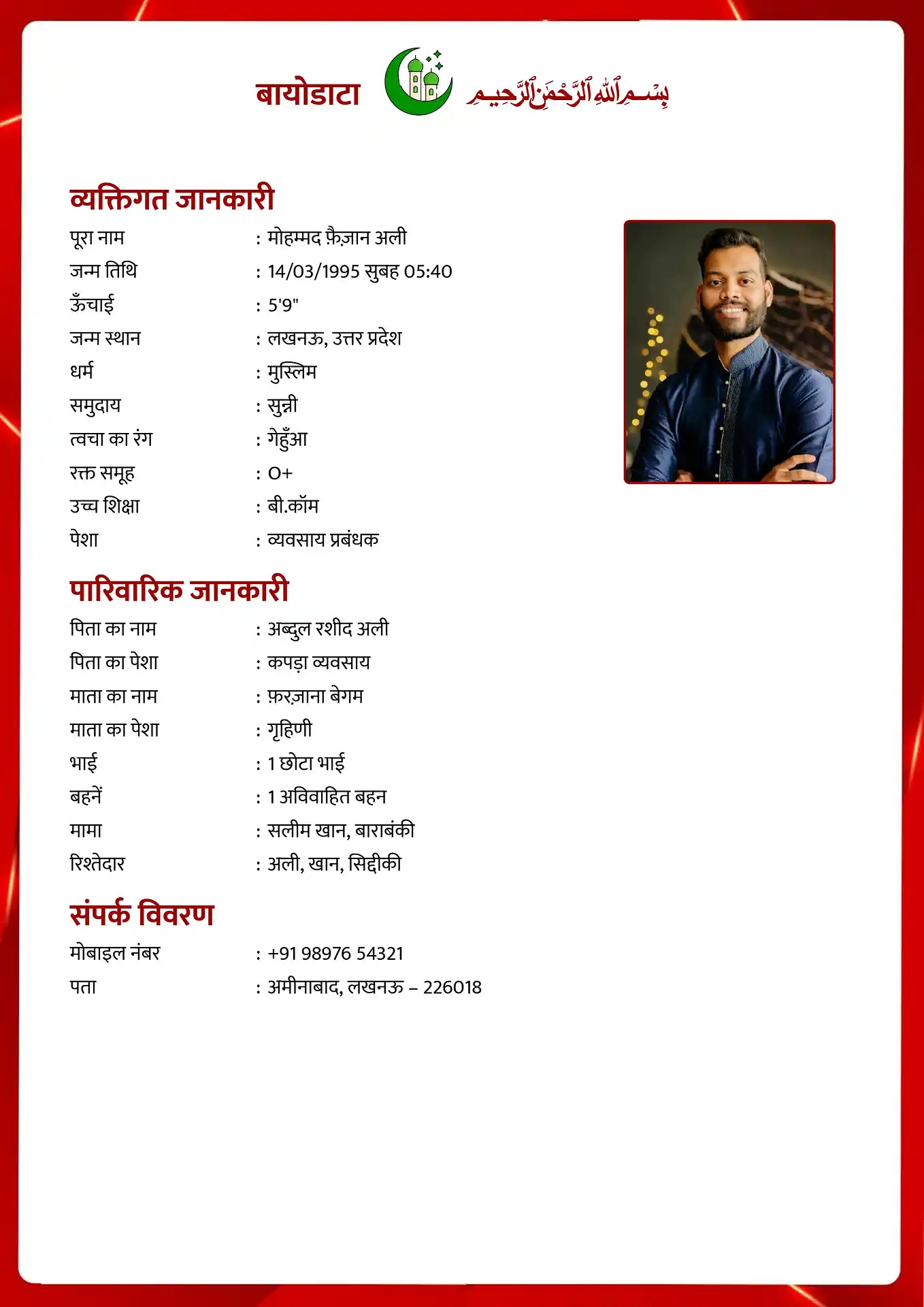
What to Include in a Muslim Marriage Biodata
These are the sections most Muslim families expect. Required sections should always be filled. Optional sections are included based on your family's preference and the community you are sharing with.
For a Muslim marriage biodata for a girl , the photo and family sections are typically the most carefully reviewed. For a Muslim marriage biodata for a boy , profession and income are often read first.
What a Muslim Biodata Does Not Include
A Muslim marriage biodata format is different from a Hindu or general Indian biodata. These sections belong to other communities and should not appear in a Muslim biodata.
Gotra
Gotra is a Hindu concept tied to Vedic lineage. It has no equivalent or use in Islamic marriage practice. Leave it out entirely.
Nakshatra and Rashi
Nakshatra (birth star) and rashi (zodiac sign) are used for Vedic astrological matching. They are not part of Islamic tradition and should not be included.
Manglik Status
Manglik is a Hindu astrological concept with no relevance in Muslim marriage searches. Including it on a Muslim biodata looks out of place and confusing to the receiving family.
If you are using a general marriage biodata maker that shows these fields, simply leave them blank - they will not appear in the downloaded file. Our templates are designed so that unused fields are automatically hidden from the final output.
How Muslim Families Share a Rishta Biodata
A rishta biodata typically moves through three channels. Download yours as a free PDF - it works cleanly across all of them.
Family and Community Networks
The most common channel. Parents or a family elder share the biodata with relatives, mosque connections, and community contacts who may know a suitable match. A printed copy is still widely used in this setting - all our templates are print-ready at A4 size.
WhatsApp and Direct Sharing
Sharing via WhatsApp has become standard. Download your Muslim biodata as a free PDF - it opens cleanly on every phone and preserves the layout exactly, unlike Word files which can shift when opened on a different device.
Matrimonial Sites
Shadi.com, MuzMatch, NikahForever, and BharatMatrimony all have dedicated Muslim sections and allow PDF biodata uploads. Uploading your biodata as a document gives families a complete picture beyond the site's standard profile fields.
If you want an editable file to update after downloading, use the Word format instead. For a full walkthrough of making any marriage biodata, read the complete guide to making a marriage biodata .
Biodata formats for other communities
Frequently Asked Questions
What is a Muslim marriage biodata called?
It is most commonly called a rishta biodata or a Muslim marriage biodata. Some families also call it a nikah biodata or a marriage proposal document. The content and format are the same regardless of what it is called.
Should I include maslak in the biodata?
Yes, for most Muslim families in India and Pakistan. Maslak (school of thought - Barelvi, Deobandi, Ahle Hadith, Salafi, etc.) is checked early by many families to ensure compatibility. Including it upfront avoids awkward conversations later.
Can I write the biodata in Urdu?
Yes. Type your details in Urdu script using your device's Urdu keyboard. The maker renders Urdu text correctly in the downloaded PDF or download in Word format file. Many families create a bilingual biodata - English for the main sections, Urdu for maslak and caste fields.
How long should a Muslim marriage biodata be?
One page. Muslim biodatas tend to be slightly more concise than Hindu biodatas - a clean, simple, single-page format is preferred by most families. The simple marriage biodata format is a good choice if you prefer a minimal layout.
Is this biodata maker free for Muslim families?
Yes. Completely free - no account, no payment, no watermark on the downloaded file. Create your Muslim marriage biodata and download it as many times as needed at zero cost.
What caste should I mention in the Muslim biodata?
Write your community or caste as your family identifies it - Sheikh, Syed, Pathan, Ansari, Qureshi, Memon, Bohra, Khoja, or other. Many families write "Muslim - caste no bar" if they are open to any community, which is equally acceptable.
Create Your Muslim Marriage Biodata Free
All relevant sections for Muslim families - maslak, sect, caste, family background. Download as PDF or Word in minutes. No account needed.
Create Muslim Biodata Free